
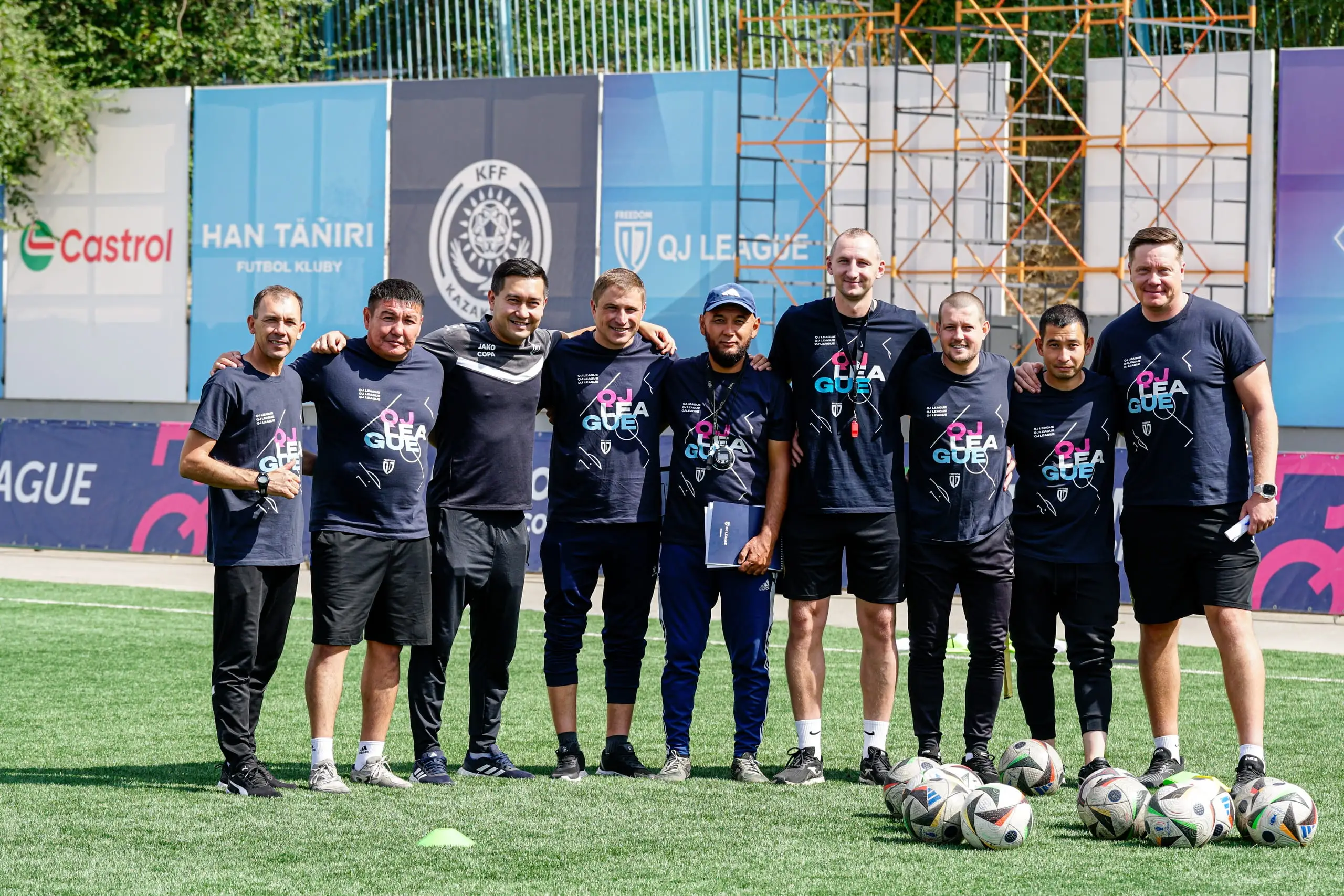
The past season marked the culmination of the first three-year cycle of Freedom QJ League.
Behind these three seasons lies an enormous amount of work carried out by the League’s competition organization staff and the sports analytics department. We present an overview of the League’s key achievements during this period.
Logistics and Calendar
Clubs participating in the Freedom QJ League cover only the costs of organizing home matches. All other expenses — including travel, accommodation, and meals for visiting teams in comfortable hotels — are fully organized and financed by the League.
This represents a major challenge for the competition organization department. As the number of tournaments grows, so does the number of matches and players. Over three years, League teams completed 980 flights, 197 train journeys, and 454 bus trips.
Players, coaches, and referees are accommodated in hotels that meet all team requirements: single, double, and triple rooms, balanced three-meal catering approved by the League, and conference rooms for theoretical sessions.
“In previous years, everything was straightforward: players and staff traveled together and returned together. Now, in League A, it’s more complex — not everyone can fly on the same flight, so we have to split the administrative staff.
For U-16 teams, an administrator, doctor, media officer, coordinator, and goalkeeper coach must be present. Younger teams may finish their match and fly back, but these staff members stay behind to manage everything until the very end,” explained League travel manager Amir Yesserkepov.
In 2025, League A featured 36 teams across U-18, U-17, and U-16 categories. Freedom QJ League B had 10 teams, while the inaugural girls’ tournament included 8 clubs. In total: 54 teams, 542 matches, and 1,620 players. Proper calendar planning is essential to ensure high-quality competition under such conditions.
Each season, the League also updates its regulations, incorporating accumulated experience and feedback.
Continuous Education
For three years, the League’s sports analytics department organized educational seminars for coaches. In total, 17 seminars were held across various regions of the country.
Each session included theoretical, analytical, and practical content, with speakers ranging from internal experts to invited specialists.
Experts monitored teams not only during League competitions but also in preseason tournaments. Collected data was analyzed, converted into detailed statistical reports for coaches, and used during seminars.
Seminars also provided coaches with an opportunity to meet informally, exchange ideas, and share professional experience.
“Future Player” and “Future Coach” Programs
A major milestone was the launch of the “Future Player” and “Future Coach” programs.
Through these initiatives, promising players and coaches from different clubs were selected and given additional opportunities to unlock their potential.
The “Future Player” program focused on individual development and support throughout the season, while the “Future Coach” program provided methodological assistance, analysis, and planning support.
“Our goal is to help players grow into tactically intelligent, independent decision-makers fully prepared for professional careers.
For coaches, our aim is to motivate and support those eager to improve their qualifications,” noted analyst Evgeny Yarovenko.
The culmination of both programs was the international QJL All Star match against Atlético Madrid’s academy in Almaty. The teams drew in regular time, with the Spanish side winning only in the penalty shootout.
A Unified Digital Ecosystem
Freedom QJ League actively integrates advanced digital technologies into youth football. Teams have access to Hudl’s Wyscout system, while the League website provides advanced statistics for every player and match.
In 2024, the League introduced the FF Manager digital platform for coaches. It allows session planning through a flexible builder and offers a rich methodological library in Kazakh, Russian, and English.
The platform has won multiple international digital awards, including Tagline Awards, MARSPO Awards, and Workspace Digital Awards.
Last season, in partnership with Freedom Telecom and BigBro, the League launched a project introducing “smart” cameras into training processes.
“Coaches simply schedule the camera in their calendar, and FF Manager automatically transfers all required data. After training, analysts review the footage, while BigBro analyzes technical, tactical, and fitness data,” explained head of the analytics department Arsen Inkarbekov.
Initially piloted in Astana, Shymkent, and Karaganda, the project is set to expand to other regions.
The completion of the three-year cycle is a significant milestone, but the League continues to move forward. U-15 teams are expected to debut next season, and the Kazakhstan Football Federation has extended the League’s rights to organize youth competitions until at least 2028. The future plans remain ambitious.


.webp)

(0).webp)


.webp)


.webp)